RNA-Seq DE 工作流程總結
注意: 載入此練習可能需要多一點時間。
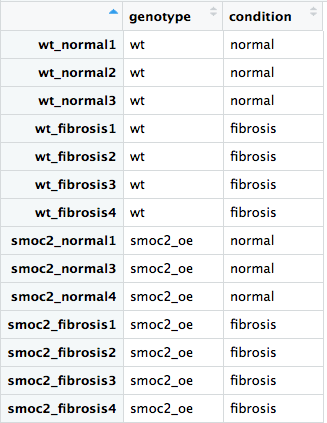
讓我們用包含 wildtype 與 smoc2 過度表現樣本的完整資料集,跑一次 DESeq2 的工作流程。我們已為你載入 DESeq2 與 dplyr 函式庫,並讀入中介資料檔 all_metadata 與原始計數檔 all_rawcounts。
本練習屬於課程
使用 R 與 Bioconductor 進行 RNA-Seq
練習說明
- 使用
rownames()、colnames()、all()與%in%運算子,檢查all_rawcounts與all_metadata的樣本是否為相同順序。 - 使用合適的設計建立 DESeq2 物件:在控制
genotype的同時,檢定condition的效應。 - 使用合適的設計建立 DESeq2 物件:分別控制
genotype與condition,但檢定genotype:condition的交互作用。
動手互動練習
試著完成這個範例程式碼,體驗一下這個練習。
# Check that all of the samples are in the same order in the metadata and count data
all(___(___) %in% ___(___))

# DESeq object to test for the effect of fibrosis regardless of genotype
dds_all <- DESeqDataSetFromMatrix(countData = ___,
                        colData = ___,
                        design = ___)

# DESeq object to test for the effect of genotype on the effect of fibrosis
dds_complex <- DESeqDataSetFromMatrix(countData = ___,
                                ___,
                                ___)