Iteratieve imputatie
In de vorige oefening heb je gemiddelde imputaties afgeleid voor missende waarden in loan_data. In een Machine Learning-interview word je echter waarschijnlijk ook gevraagd naar dynamischere imputatietechnieken die steunen op andere kenmerken in de gegevensset.
In deze oefening ga je een Machine Learning-gebaseerde aanpak oefenen door missende waarden te imputeren als functie van de overige kenmerken met IterativeImputer() uit sklearn.impute. Dit is een multivariate imputer die elk kenmerk schat op basis van alle andere in een soort estafette- of "round-robin"-procedure.
Let op: deze functie is experimenteel. Lees daarom de documentatie voor meer informatie.
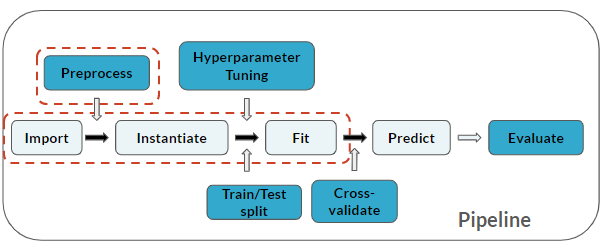
Je staat op dezelfde plek in de pipeline:
Deze oefening maakt deel uit van de cursus
Machine Learning-sollicitatievragen oefenen in Python
Interactieve oefening met praktijkervaring
Probeer deze oefening door deze voorbeeldcode aan te vullen.
# Explicitly require this experimental feature
from sklearn.experimental import enable_iterative_imputer
# Now you can import normally from sklearn.impute
from sklearn.impute import IterativeImputer

# Subset numeric features: numeric_cols
numeric_cols = ____.____(____=[____.____])