RNA-Seq DE 工作流程总结
注意: 加载本练习可能需要稍长时间。
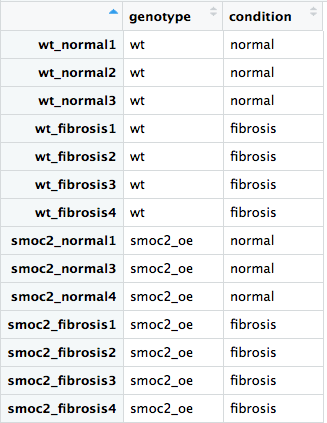
让我们使用包含野生型和 smoc2 过表达样本的完整数据集,跑一遍 DESeq2 工作流程。我们已为您加载 DESeq2 和 dplyr 库,并读入了元数据文件 all_metadata 和原始计数文件 all_rawcounts。
本练习是课程的一部分
使用 R 中的 Bioconductor 进行 RNA-Seq 分析
练习说明
- 使用
rownames()、colnames()、all()和%in%运算符,检查all_rawcounts与all_metadata中的样本顺序是否一致。 - 使用合适的 design 创建 DESeq2 对象,在控制
genotype的同时,检验condition的效应。 - 使用合适的 design 创建 DESeq2 对象,分别控制
genotype和condition,但检验genotype:condition。
交互式实操练习
通过完成这段示例代码来试试这个练习。
# Check that all of the samples are in the same order in the metadata and count data
all(___(___) %in% ___(___))

# DESeq object to test for the effect of fibrosis regardless of genotype
dds_all <- DESeqDataSetFromMatrix(countData = ___,
                        colData = ___,
                        design = ___)

# DESeq object to test for the effect of genotype on the effect of fibrosis
dds_complex <- DESeqDataSetFromMatrix(countData = ___,
                                ___,
                                ___)