Classificare una raccolta di segnali stradali
Ora che il veicolo autonomo si è fermato da solo con successo, il tuo team si sente sicuro nel permettere all'auto di proseguire nel percorso di test.
Il percorso di test include 59 ulteriori segnali stradali suddivisi in tre tipi:

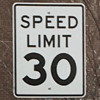

Al termine della prova, ti viene chiesto di misurare le prestazioni complessive dell'auto nel riconoscere questi segnali.
Il pacchetto class e l'insieme di dati signs sono già caricati nel tuo workspace. Lo è anche il data frame test_signs, che contiene un insieme di osservazioni su cui testerai il tuo modello.
Questo esercizio fa parte del corso
Apprendimento supervisionato in R: Classificazione
Istruzioni dell'esercizio
- Classifica i dati
test_signsusandoknn().- Imposta
trainuguale alle osservazioni insignssenza etichette. - Usa
test_signsper l'argomentotest, di nuovo senza etichette. - Per l'argomento
cl, usa il vettore di etichette già fornito.
- Imposta
- Usa
table()per analizzare le prestazioni del classificatore nell'identificare i tre tipi di segnali (la matrice di confusione).- Crea il vettore
signs_actualestraendo le etichette datest_signs. - Passa a
table()il vettore delle predizioni e il vettore dei segnali reali per ottenere la tabella incrociata.
- Crea il vettore
- Calcola l'accuratezza complessiva del kNN usando la funzione
mean().
esercizio interattivo pratico
Prova questo esercizio completando questo codice di esempio.
# Use kNN to identify the test road signs
sign_types <- signs$sign_type
signs_pred <- knn(train = ___[-1], test = ___[-1], cl = ___)

# Create a confusion matrix of the predicted versus actual values
signs_actual <- ___
table(___, ___)

# Compute the accuracy
mean(___ == ___)