第 1 部分:文本反转模型 - Encoder
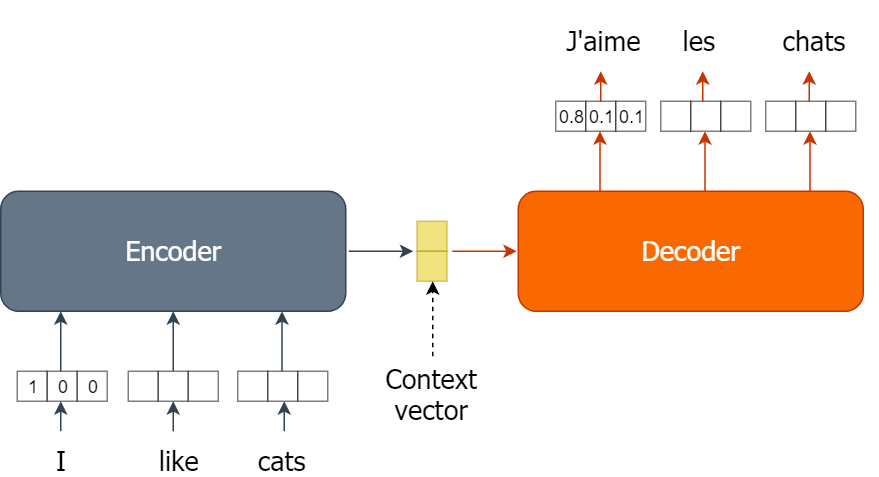
创建一个简单的文本反转模型,是理解编码器-解码器(encoder-decoder)模型机制及其连接方式的有效方法。接下来,您将实现文本反转模型的编码器部分。
本节把编码器的实现拆分为两个练习。在本练习中,您将定义辅助函数 words2onehot()。该函数应接收一个单词列表和字典 word2index,并将该单词列表转换为由 one-hot 向量组成的数组。工作区中已提供 word2index 字典。
本练习是课程的一部分
使用 Keras 的机器翻译
练习说明
- 在
words2onehot()函数中,使用字典word2index将单词转换为 ID。 - 将单词 ID 转换为长度为
3的 one-hot 向量(使用num_classes参数),并返回结果数组。 - 调用
words2onehot()函数,传入单词I、like和cats,并将结果赋给onehot。 - 使用
print()和zip()函数打印单词及其对应的 one-hot 向量。zip()函数可同时遍历多个列表。
交互式实操练习
通过完成这段示例代码来试试这个练习。
import numpy as np

def words2onehot(word_list, word2index):
  # Convert words to word IDs
  word_ids = [____[w] for w in ____]
  # Convert word IDs to onehot vectors and return the onehot array
  onehot = ____(____, num_classes=3)
  return ____

words = ["I", "like", "cats"]
# Convert words to onehot vectors using words2onehot
onehot = ____(____, ____)
# Print the result as (, ) tuples
print([(w,ohe.tolist()) for ____,____ in zip(words, ____)])