Melatih decision tree
Random forests adalah model andalan untuk prediksi; model ini biasanya bekerja baik tanpa banyak penyesuaian. Namun, kita akan terlebih dahulu mempelajari blok pembangun random forests — yaitu decision trees.
Decision tree membagi data ke dalam kelompok berdasarkan fitur. Decision tree dimulai dari sebuah root node, lalu membagi data terus-menerus hingga mencapai leaf nodes.
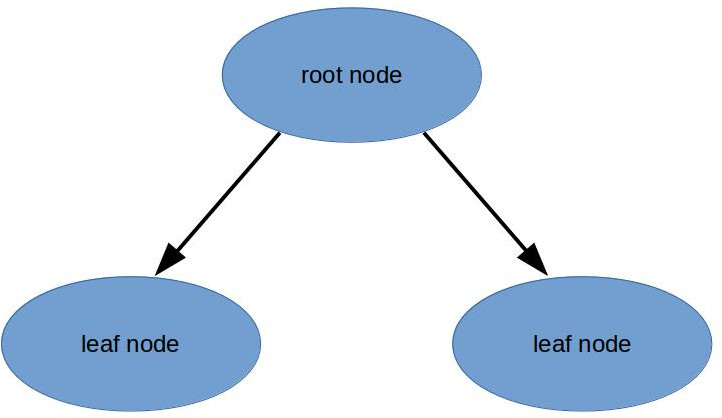
Kita dapat menggunakan sklearn untuk melatih sebuah decision tree dengan DecisionTreeRegressor dan .fit(features, targets).
Tanpa membatasi kedalaman (atau tinggi) pohon, model akan terus membagi data hingga setiap daun berisi 1 sampel, yang merupakan puncak dari overfitting. Kita akan mempelajari lebih lanjut tentang overfitting di bab-bab berikutnya.
Latihan ini merupakan bagian dari kursus
Machine Learning untuk Keuangan dengan Python
Instruksi latihan
- Gunakan kelas
DecisionTreeRegressoryang telah diimpor dengan argumen default (tanpa argumen) untuk membuat model decision tree bernamadecision_tree. - Latih model menggunakan
train_featuresdantrain_targetsyang telah kita buat sebelumnya (dan kini berisi fitur hari-dalam-pekan dan volume). - Cetak skor pada fitur dan target pelatihan, serta
test_featuresdantest_targets.
Latihan interaktif langsung praktik
Cobalah latihan ini dengan melengkapi kode contoh ini.
from sklearn.tree import DecisionTreeRegressor

# Create a decision tree regression model with default arguments
decision_tree = ____

# Fit the model to the training features and targets
decision_tree.fit(____)

# Check the score on train and test
print(decision_tree.score(train_features, train_targets))
print(decision_tree.score(____))