Bagian 2: Model pembalik teks - Encoder
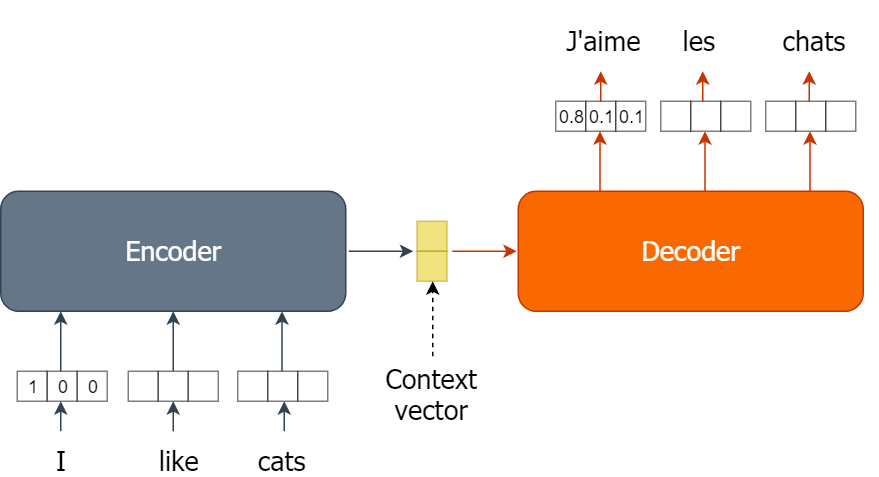
Sekarang Anda akan mengimplementasikan sisa encoder dari model pembalik teks. Encoder memproses vektor one-hot yang dihasilkan oleh fungsi words2onehot() yang telah Anda implementasikan sebelumnya.
Di sini Anda akan mengimplementasikan fungsi encoder(). Fungsi encoder() menerima sekumpulan vektor one-hot dan mengonversinya menjadi daftar ID kata.
Untuk latihan ini, fungsi words2onehot() dan kamus word2index (berisi kata We, like, dan dogs) telah disediakan.
Latihan ini merupakan bagian dari kursus
Penerjemahan Mesin dengan Keras
Instruksi latihan
- Konversikan
onehotmenjadi array ID kata menggunakan fungsinp.argmax()dan kembalikan ID kata tersebut. - Definisikan sebuah daftar berisi kata
We,like,dogs. - Konversikan daftar kata menjadi vektor one-hot menggunakan fungsi
words2onehot(). Ingat bahwawords2onehot()menerima daftar kata dan sebuah kamus Python sebagai argumen. - Dapatkan vektor konteks dari vektor one-hot menggunakan fungsi
encoder().
Latihan interaktif langsung praktik
Cobalah latihan ini dengan melengkapi kode contoh ini.
def encoder(onehot):
  # Get word IDs from onehot vectors and return the IDs
  word_ids = np.____(____, axis=____)
  return ____

# Define "We like dogs" as words
words = ____
# Convert words to onehot vectors using words2onehot
onehot = ____(____, ____)
# Get the context vector by using the encoder function
context = encoder(____)
print(context)